The Copper brothers – one family’s war

Some families had just one relative remembered on the war memorial at The Vine. Others, like the Copper family from the Hartslands area in Sevenoaks, lost more of their men.

Silas and Emma Copper had ten surviving children from a total of fourteen born during the course of their marriage. They lost one son in the war every year from 1915. Then, in September 1918, their son-in-law, Thomas Garrett, husband of their daughter, Amelia, died of natural causes. Two other sons, Charles , a veteran of the Boer War and Stephen also fought, both surviving the war although Stephen was badly wounded.

Benjamin Copper

Benjamin Copper, born in 1889, was the youngest of the brothers and the first to be killed in action. The 1911 census records Benjamin, a general labourer, as a patient at the local cottage hospital.

Private Benjamin Copper

Benjamin Copper

Benjamin served with the Royal West Kent regiment and was at the Front from June 1915. He was killed in October that year at the Battle of Loos and is remembered on the Loos Memorial.

Silas George Copper

Silas Copper, born in 1879, was the eldest of the brothers who died. The 1911 census shows Silas, known by his second name of George, self employed as a chimney sweep. According to his service records, he lived at 6, Holyoake Terrace with his wife, Margaret Edith, whom he had married just before the outbreak of war, on 1st August 1914.

Private Silas George Copper

Silas George Copper

Having previously fought in the Boer War, Silas enlisted in December 1915 aged 37 and was recorded as having good physical development, being 5’ 8 1/2 tall and weighing 165 lbs. He had various tattoos, including, marks on his right forearm and the initials SG in a heart with a dagger. He served with the Royal Sussex regiment before being transferred to the Royal West Kents. Silas died of his wounds in December 1916 and is buried in the Bethune Town cemetery, north of Arras, France.

William Robert Copper

William Copper was born in 1883. The 1911 census shows him living with his wife, Martha Louise and young son Roy. William is recorded as a bricklayer’s labourer. According to his obituary, William had worked at Knole House, home of the Sackville family, for six years before joining the army, having been in the regular forces for twelve years. He was a keen cricketer and played regularly for Godden Green, where he is remembered on the village war memorial.
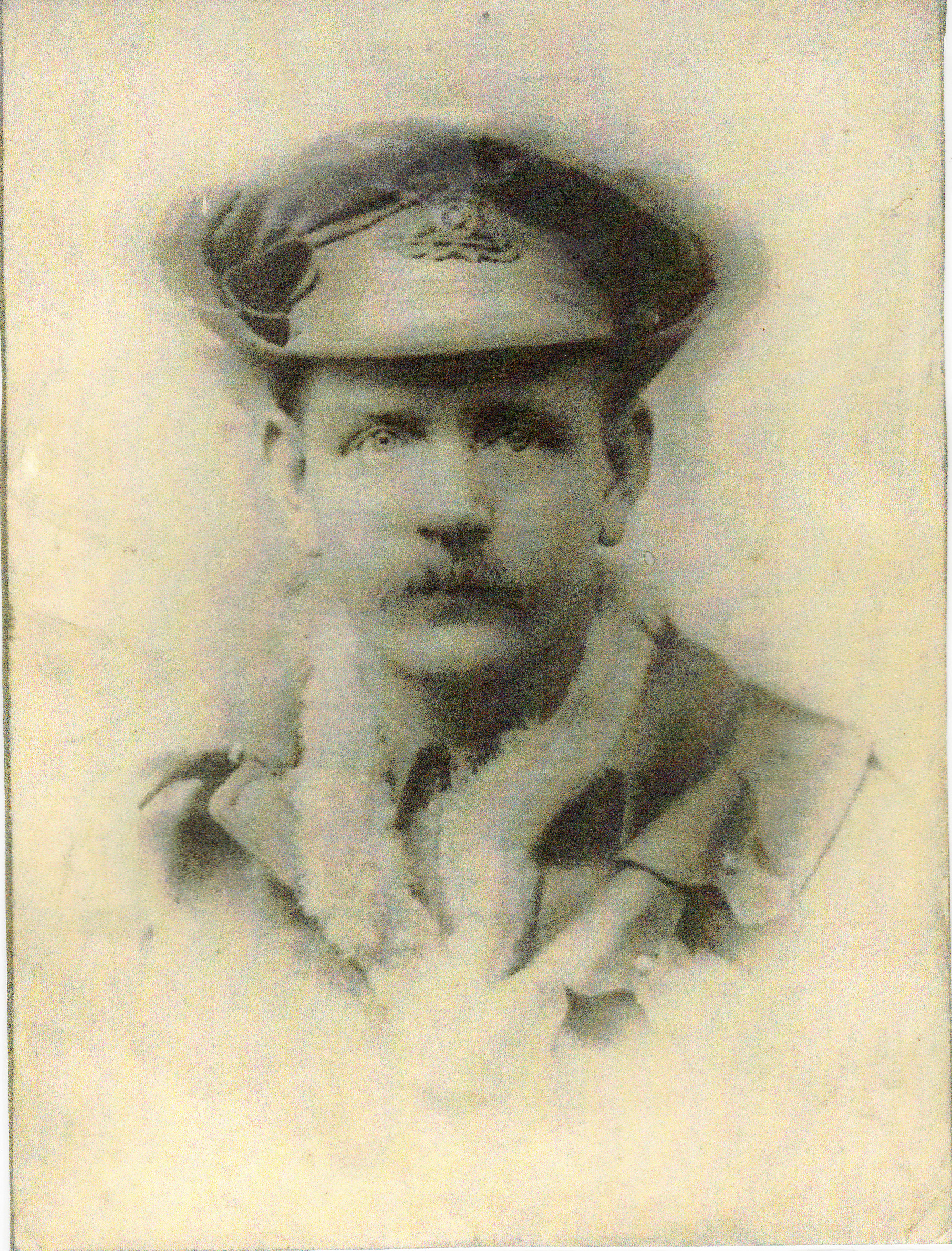
Bombardier William Robert Copper

William Robert Copper

William, a bombardier with the Royal Garrison Artillery, had been home on leave in December 1916, spending Christmas with his family and no doubt mourning the death of his brother, Silas. He died six weeks after his brother in January 1917, shortly after returning to the Front, at the Somme and is buried in the Longueval Road Cemetery, France.

Thomas Albert Garrett

Thomas Garrett was born in Chevening in 1886, the son of Sampson Henry Garrett, a shepherd and his wife, Tryphena. The 1901 census shows that Thomas has became an apprentice coach builder.

Unfortunately, Thomas’s service records have not survived but he appears to have joined the army in 1904 and the 1911 census records him as stationed abroad with the Royal Garrison Artillery.

image

Thomas Albert Garrett

During the war he wrote a letter from the Furzedown Convalescent Home in Limpsfield, which was reproduced in the Sevenoaks Chronicle in February 1915:

‘The retreat from Mons was a grand feat of arms. The infantry covered retirement of our guns daily in perfect style, and when it was possible for us to get into position we also helped to cover the infantry regiment, who fought the Germans often to a standstill and forced them to retire before retiring themselves. Then came the day for advance, which was a bad day for the Germans when they had to retire from their prize Paris to the Aisne. They fought very hard at times but were no match for that ‘contemptible little army’, which were at them night and day.

There were awful sights on our retirement, but it was beaten by the sight on the line of the German retreat, leaving many prisoners who were glad to be taken. They were half starved in their rush for Paris. They were well fortified with big guns and they gave us a warm time. One day, finding our battery with their Jack Johnsons, we lost nine men killed, five wounded, and one wagon was destroyed. We had nerves for a time I tell you, but got over it and we did good work until we were relieved by the French. We then left for Flanders, and there have been some warm times there. I left the “boys” behind fighting their hardest and getting the best of it. I saw the West Kents a few times and like lots of other Regiments have gone through it bravely and have done good work’.

‘ I have had the luck not to be wounded but Mr Rheumatism caught me and I was taken to Boulogne, from there to Charing Cross Hospital, and now I am at Furzedown Convalescent Home. Everything is done here for our comfort. We have all sorts of games and go for nice long walks when it fine. We also have a nice kind lady and sister in Mrs Bently, and a fine staff of kind nurses to look after us. We were also well looked after at Charing Cross Hospital. We have had nice motor rides, and kind ladies often asked us to tea.

I was pleased to see the name of Mr Weth in the Roll of Honour in your paper. He is a good soldier and marksman (a dead cert). I hope that new war picture “Wake Up” will soon be shown in Sevenoaks. It will all help to swell the ranks of Sevenoaks. Sevenoaks have made a grand show, and I do hope if enlistment comes as a thing of force men who have enlisted voluntary will get a badge of some sort; also that men who have tried to enlist and have failed because of health should not in any way be slighted”.

Thomas had married Amelia Copper in the later summer of 1913 and lived at 9, Prospect Place. He died of natural causes in 1918. He had served in the army for nearly fourteen years, having seen service in India and Aden. Thomas had been in France for eight months before being posted to Salonika in November 1915 for the remainder of the war and is buried in the Salonika Military Cemetery, Greece.

Stephen Copper
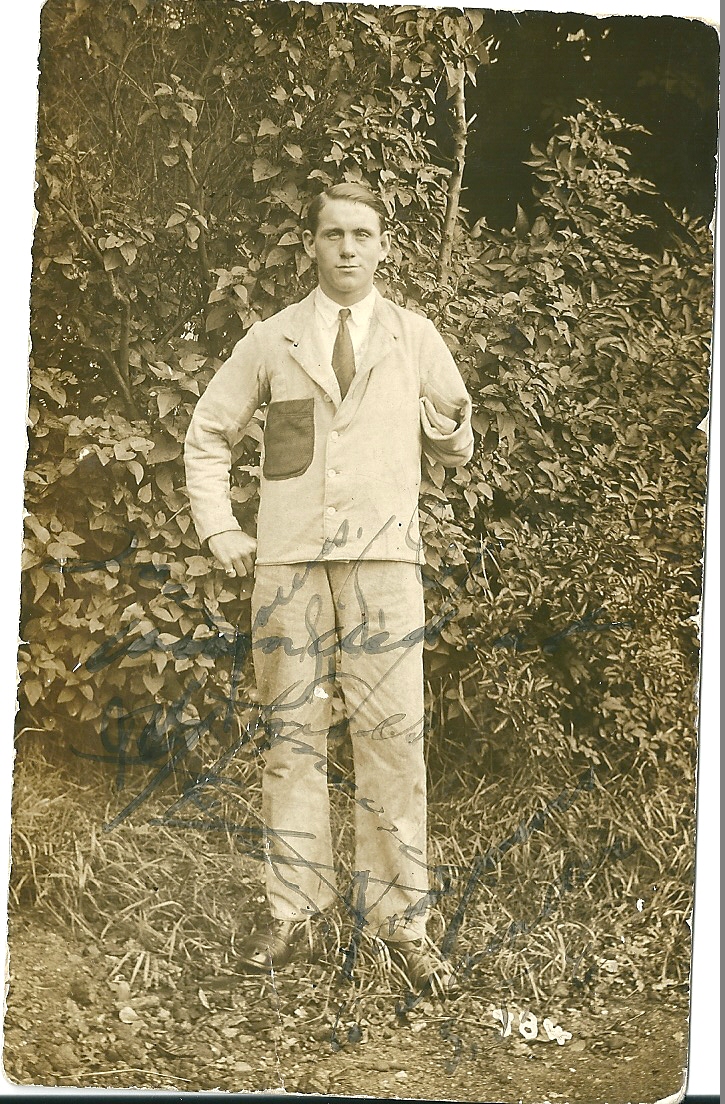
IMG_1877

Stephen Copper

Stephen Copper enlisted in September 1914 and served with the Royal West Kents. He was shot in the left arm in March 1916, the wound being so severe that the arm was later amputated. Last year I asked Stephen’s son what his father did after the war, he replied that despite his injury, he drove a motorbike for Kipps the butcher’s at St John’s! His employer’s son, Lieutenant George Kipps, was also killed during the war and is remembered on the memorial.

George Walter Quinnell (1892 – 1915) and his brother Albert Edward (1900 – 1917), both remembered on the town memorial, were first cousins of the Copper brothers, through their mother, Emma’s (nee Luckman) sister, Elizabeth. It is possible that John Luckman, also named on the war memorial, is connected to the family but his background has proved difficult to research. It is possible that he was sent to Canada as one of the British Home Children before later returning and enlisting. At least seven members of this close family in Sevenoaks paid the ultimate sacrifice while others lived with the consequences for the rest of their lives.

Kenrid Davey – An ANZAC from Sevenoaks

Following my appeal for information relating to any of the Sevenoaks Anzacs, I was pleased to hear from Keith Davey, a great nephew of Kenrid Davey, who was one of six men I had listed from the Sevenoaks area who had emigrated to New Zealand before the outbreak of war.

image003Kenrid Horace Davey

Kenrid Horace Davey was born in Riverhead in late 1888, the son of David Davey and his wife, Elizabeth, known as Lizzie. The 1891 census shows the family living on Chipstead Lane with David working as a plumber and painter; Kenrid was one of six children then living at home. By 1901, the family were living at The Old School House in Chipstead.

Leaving for New Zealand

There is a Horace Davey, aged 24 listed on the passenger list for the Ionie, which departed on 23 May 1912 for New Zealand. It’s possible that this is Kenrid and interesting to note that both George Marshall and Arnold Jarvis were also on board. Like Kenrid, both George and Arnold emigrated and later fought, serving with the AIF, but unlike Kenrid who survived, they are remembered on the Sevenoaks war memorial. It is interesting to speculate that they knew each other and were making the trip together.

Kenrid’s service records show that was working as a butcher when he enlisted and was 5’4″ tall, weighing 155 pounds. He gave his next of kin as his father who by then was living at Saint William’s Villa, Dunton Green, while his nearest relative in New Zealand was his older sister, Phyllis.

He embarked from Wellington on 9 October 1915 as a Rifleman in 1st Battalion, New Zealand Rifle Brigade bound for Suez and served in Egypt for the remainder of 1915 before leaving for the Western Front the following year. He was wounded in his left arm by a shell on 10 September 1917 at Ypres and was invalided to England two weeks later.

His papers show a largely exemplary service record with just three disciplinary incidents: being AWOL for 2 hours in November 1916 (lost 14 days pay), trotting a horse on a cobbled road in January 1917 (lost 7 days pay) and for being without his helmet in March 1917 (lost 8 days pay).

Kenrid returned to New Zealand and died in 1968. His brother, Keith Davey’s grandfather, Sidney Charles Davey, also served having enlisted on 29 August 1914 and joined the Royal Engineers, eventually being promoted to Lieutenant.

image002Sidney Charles Davey

Keith also mentioned that several cousins of Kenrid and Sidney had also lived in the Sevenoaks area and fought during the war, including Horace James Taylor, a cousin through their mother Lizzie’s sister, Emma, who had married Alfred Taylor.

A Cricketing Cousin

Horace Taylor was born in Sevenoaks on the 26 December 1895 and his father, Alfred, would have been well known in the town as a harness and saddle maker. The 1911 census shows the family living at 50-52 London Road (which was also known as Belgrave House) with Horace and his younger brother Alfred listed as being at school and their older sister, Millicent, recorded as an assistant school teacher.

Screen Shot 2015-09-10 at 14.54.50Horace James Taylor

Both boys attended Sevenoaks School as day boys; Horace could have attended any time between 1904 – 1912  and according to the Sennockian (1922) he left the school in 1912 and became a bank clerk.

Horace enlisted in late August 1914 when he was nineteen, joining the West Kent Yeomanry and saw service with them at Gallipoli and in Egypt before going on to serve in Palestine and France. He served as a Private, albeit holding the rank of corporal for two brief periods. By June 1918 Horace had returned to England to attend a cadet course, and he spent the remainder of the war working at the Larkhill Reception Camp in Wiltshire.

He is named on the Sevenoaks School’s Honour Board, in the 1914 Roll of Honour and on the roll of local serving men in St Nicholas’ Parish Church. His brother, Alfred, also saw service having joined the London Regiment (2nd Battalion) on the outbreak of war, but in 1916 was transferred to the West Riding Regiment (13th Battalion). Both brothers survived the war.

Horace was known for his interest in and talent for cricket, first displayed at School when he played in the First XI 1910 – 1912. He was later a member of the Kent County side between 1922 – 1928. Horace married Doris Austin in Tonbridge in 1935 and lived on until 1961.

Research has shown a further link with one of the men named on the Sevenoaks war memorial. In January 1916 Horace and Alfred’s sister, Millicent, married their former fellow pupil, Arthur Thompson, son of the Sevenoaks Post Office Superintendent.

imageArthur Herbert Thompson

Arthur was killed later that year in the September during the Battle of the Somme. The Sevenoaks School Quarterly obituary speaks of “his young wife, whose courage under her cruel loss has taught us all a lesson of endurance and faith”. Arthur’s brother,  Sidney Ernest Thompson, had died on 25 September 1915 and is buried at Greatness cemetery, Sevenoaks.

My thanks to Keith Davey and Sally Robbins, Archivist at Sevenoaks School, for their invaluable help with this post. Please do get in touch if you have a link to any of the other Sevenoaks Anzacs or men named on the war memorial.

Herbert Terry DCM: ‘A splendid example of courage’

A letter recently appeared in the Sevenoaks Chronicle from David Terry appealing for information regarding his grandfather, Herbert William Terry. David referred to an article, which I had seen, regarding his grandfather which had been printed in the Chronicle during the war and later reproduced as a ’75 years on’ item in the 1990s. Other than that I knew little about Herbert and so emailed David to see if he had any further information and if I could help him in his research.

Luckily David has family photos and newspaper clippings that helped us reveal Herbert’s story and research revealed that Herbert’s service papers had survived intact and I was able to send these to David.

Herbert was born in Sevenoaks in 1887 to Arthur Jasper Terry (1861 – 1916) and his wife, Margaret Eliza nee Spavins (1857 – 1946). The 1901 census shows the family living on Hartslands Road with Arthur working as a gardener and thirteen year old Herbert described as a ‘cyclists boy’, possibly for the Post Office.

Herbert was twenty seven and working as a gardener when he enlisted shortly after the war began at Maidstone on 7 September 1914. His service papers show that he was 5ft 6 ½ with a dark complexion, blue eyes and black hair. He initially joined the 7th Battalion, Royal West Kents and was later transferred to 9th Battalion in July 1915 and then in August of that year to the 8th. Herbert had married Mary Maria Mercer (1894 – 1966) in early 1914 and his first son and David’s father, Arthur Bertram Mons Terry, was born later that year, to be followed by five other children.

imageHerbert with wife, Mary and eldest son Arthur, who was also given the name of Mons

According to his papers, Herbert did not leave for the Front until 1 October 1915. His papers show an unblemished record (apart from one instance of slightly overstaying his leave which led to his forfeiting one days pay) and that he was promoted to Lance Corporal then Acting Corporal and finally to Corporal in the autumn of 1916.He was promoted to Sergeant the following year and was awarded the Distinguished Conduct Medal in early 1918. According to the citation in the London Gazette of 17 April 1918 he received the medal

‘For conspicuous gallantry and devotion to duty. He was one of a party which entered the enemy’s trenches and captured two prisoners. He has continually done excellent patrol work and has set a splendid example of courage and good leadership during a long period’.

Some months before this on 24 July  1917, Herbert sustained a shell wound to his left leg, which was subsequently amputated. Herbert spent some time in a hospital in St Albans recovering from his operation and was honourably discharged in September 1918.

imageHerbert in hospital in 1917

At the time the Chronicle noted that

‘Mrs Terry of Bushes Road (now Prospect Road) received the news that her husband, Sergeant Herbert Terry, had his left leg blown off in the recent fighting’

After the war, Herbert worked at the Sevenoaks Telephone Exchange as male supervising telephonist, for many years being in charge of the night staff. He retired after thirty years’ service, with another profile in the Sevenoaks Chronicle and recalled how the night staff had once consisted of himself and one assistant, having since grown to more than twenty. He also recalled hectic nights during the Second World War

‘with 80 copies of the war communique to write out in between the passing of air-raid warning messages to exchanges and civil defence units throughout the area’.

Herbert enjoyed a long retirement and died in 1976 aged 89 and is buried in Greatness Cemetery. If any reader remembers Herbert or his family, I know that David Terry would be very interested to hear from you.