Letters home – ‘The Full Story of the Arethusa by a Sevenoaks Jack Tar’

In the early weeks of the war, a number of men from Sevenoaks who were by then in training or already on active service, wrote to the Sevenoaks Chronicle with tales of their exploits. One of the first to do so was Thomas Porter. Thomas was born in Sevenoaks in 1891, the son of Thomas Porter and his wife, Ellen. The 1911 census showed Thomas as aged twenty four, living at 13, Redman Place, High Street, Sevenoaks, with his parents and four of his siblings.

Thomas’s letters are accounts of his time as a Stoker on the Arethusa during the Battle of Heligoland Bight, the first naval battle of the war, which was fought on the 28th August 1914.

Thomas had joined the Royal Navy on 6th August 1909, for the usual period of twelve years. At the time of his joining up he was working as a plumber and his papers show that he was nearly 5’4 tall, with a fresh complexion, brown eyes and hair. Thomas served on a number of ships before joining the Arethusa. From 1909 he was part of the crew of nine ships including the Pembroke, Agamenon, and Blenheim. He was promoted Acting Stoker while still with the Arethusa in January 1915 but left the ship that March and continued to serve with the Navy until October 1919 when, as Leading Stoker, he was invalided out of the service with his character having been ‘Very Good’ throughout.
image

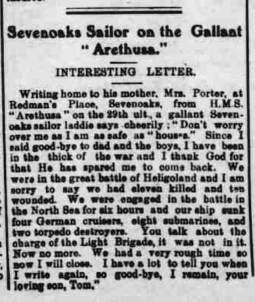
Thomas’s first letter in the Sevenoaks Chronicle

Thomas wrote two letters that were published, the first to his mother, the second to the Sevenoaks Chronicle. He tries to strike a reassuring tone in the letter to his mother

Don’t worry over me as I am as safe as ‘houses’. Since I said goodbye to Dad and the boys, I have been in the thick of the war and thank God for that. He has spared me to come back. We were in the great battle of Heligoland and I am sorry to say we have eleven killed and two wounded. We were engaged in the battle for six hours and our ship sunk four German cruisers, eight submarines and two torpedo destroyers. You talk about the charge of the Light Brigade, it was not in it. Now no more. We had a very rough time so now I will close. I have a lot to tell you when I write again, so goodbye, I remain, your loving son, Tom.

The second letter was published the following week billed as the Full Story of the Arethusa by a Sevenoaks Jack Tar.

This is an account of the great battle of Heligoland. I am just writing as I was an eye witness. It was a sight I shall never forget. We had only been in commission a week. We left on the Thursday from Harwich to try and decoy the skulkers out into the North Sea.

My captain told us the night before we went into action that we were going to have a rub at them sometime next morning. We were steaming all night long without lights, which was a very dangerous job, as there were forty seven destroyers of the British and two 2nd class cruisers about – the Arethusa and HMS Fearless. Well, all went well until about 7 o’clock next morning, and then we were at it.

There was a black fog all around us, but we were not more than three miles off the big forts of Heligoland, and we could see the German destroyers coming to meet us. But we had no idea we were going to meet cruisers. We opened fire on them and of course they retaliated and we had not been in action more than 20 minutes when we sunk one of their destroyers. Yes! Our boats peppered it into them. Then all of a sudden we saw a big cruiser coming towards us, so of course we had to do our best. I had just come off watch, and the fog was still very black, and as I came on deck a terrible sight I saw. Dead and wounded all around me, and the shells of the Germans still bursting over our heads. But we had to stick it. I did my best. I gave a hand with the wounded but I could not see a stretcher, and so I picked up a piece of old canvas, carried two poor chaps to sick bay in it, and back I came.

We came out of action and we had not been out about half an hour when our skipper sighted another two cruisers of the enemy, so of course we had to face the music once more. And this time we all thought it was all up with us, as we were badly damaged. We had our gunners shot away from their guns like nine-pins, and others came up to take their places and then we had four guns out of action, but we had two or three to carry on with, as we meant to fight until the last. Then all of a sudden we sighted the cruisers and battle cruisers of our own Fleet coming to our assistance. It was a Godsend, because we were hit badly below the waterline. We could only steam 20 knots then, as our engines had nearly been put out of action, and afterwards we had to be towed home to Bonny England by the cruiser Hague, and when we got to Sheerness we did get a “chuck-up” by the lads on the battleships.

Mr Churchill came aboard and had a look over our ship to see the damage and to look at our poor lads who had fallen in the battle. After all we went through, it was a marvel to come out of it all. And last of all I must tell you that our captain told us that we had all done our duty and the next time we went in action he hoped we would put our trust in him as we had put our trust in us. We are going to have another out later on to see if we can make some more of them come out and go under.

Apart from a brief reference to Thomas when his brother George was mentioned in the Sevenoaks Chronicle, I haven’t yet been able to find further reference to him, either during the war or after. On 21st September 1917, in its regular ‘Our Boys’ column, George Porter was mentioned as a Sapper in the Royal Engineers home on leave from his current base at Canterbury. According to the brief article, George’s brother Ernest was serving with the Kent Cyclists while Tom was noted as being ‘for some time on board the Arethusa when she did saucy things in the North Sea’.

This short but detailed piece was the first account of any Sevenoaks man who had experienced combat to be published and read by local people.

All of the Porter brothers appear to have survived the war but there was one wartime casualty in the family with the death of their sister, Clarice May Cross nee Porter  (1892-1918). In its report of her burial, the Chronicle reported that Clarice had died of blood poisoning in hospital in Folkestone. Her obituary noted briefly that Clarice had worked in a munitions factory during the war ‘and there contracted the disease of which she died’. Clarice was buried in the cemetery at St Nicholas and left behind her husband, Clarence, and baby daughter, Clarice, who was just a few weeks old.

Another of Thomas’s sisters, Elsie Nellie (1886-1975) married Charlie Draper, the soldier whom I wrote about in my post Remember Me 

As ever, I would be very interested to hear from anyone with further information regarding this local family, at least four of whom served either abroad or on the home front.
 

‘For gallantry and leadership’ – the story of Jack Whyntie MC

Cyril John ‘Jack’ Whyntie was an early recruit to Kitchener’s Army and had a successful career throughout the war. Clearly earmarked as a promising recruit, his bravery was to win him the Military Cross in the last year of the war.

Cyril was born on 5th October 1894 in Kentish Town, London, to William Whyntie (1860-1948) a draper originally from Scotland, and his wife, Annie Frances (1867-1938).

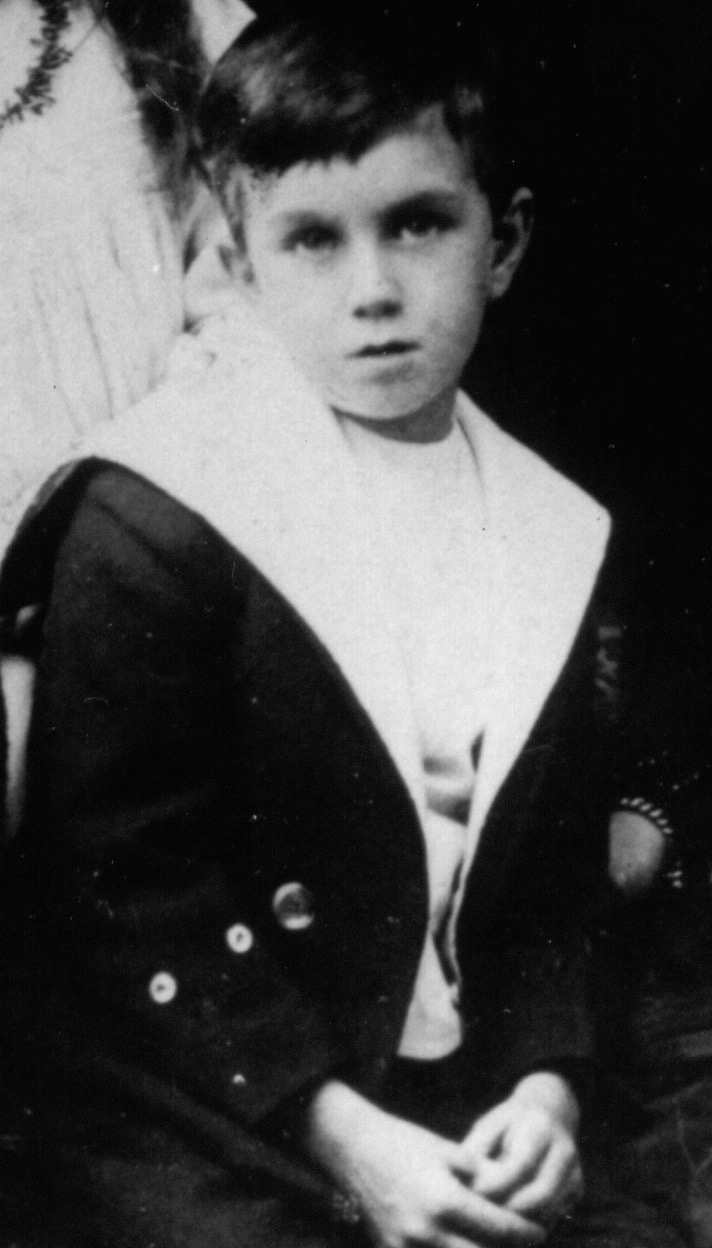
imageA young Cyril John ‘Jack’ Whyntie

By 1901 the family were living in Sevenoaks at 118, High Street. That year’s census shows William working as a draper’s manager and living with his wife, sons Jack and Fred, and daughter, Olive. Thirteen servants were also listed as residing at the premises.

By 1911, Jack was listed as an apprentice draper and the family now included two other daughters, Doris and Kathleen. Including servants and a companion to his wife, William Whyntie’s sizeable home of fourteen rooms housed fifteen people, including the appropriately named Bertha Draper, sister of Frank Draper who was killed in 1917 and is remembered on the Sevenoaks War Memorial.

image

imageViews of Whyntie & Co. in the High Street, Sevenoaks

The family were Wesleyans and William Whyntie often preached and involved himself in church business. Cyril had been educated at Avenue House School, Sevenoaks, followed by the Judd School in Tonbridge. After leaving he had been apprenticed as a draper to Frank East of Tonbridge. Like many Sevenoaks men, shortly after the outbreak of war he enlisted at Tunbridge Wells on 4th September 1914 where he was assigned to 7th Battalion The Queens Own Royal West Kent Regiment, one of the new regiments composed of recruits who answered Lord Kitchener’s appeal for volunteers. His papers show that he was 5 10 & 3/4 tall with grey eyes, brown hair and a fresh complexion.

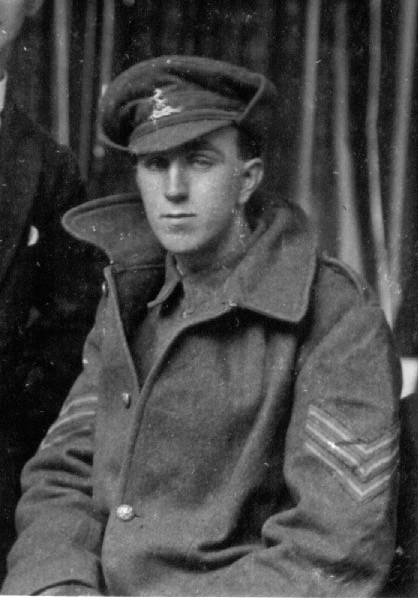
imageSergeant Jack Whyntie, Royal West Kents

By the time Jack was sent to France with his battalion in July 1915 he had been promoted from lance corporal to corporal,  lance sergeant and then sergeant. As a sergeant in 7th Royal West Kents, Jack saw action in the early days of the Somme and was present at the capture of  Trones Wood, where three other Sevenoaks men, Fred Gilks, Lawrence Bowles and James Pettitt, all in Jack’s battalion, lost their lives on 13th July 1916.

imageJack Whyntie, taken at the Essenhigh Corke Studio, Sevenoaks

Jack Whyntie’s records show that he remained at the front until February 1917 when he returned home for four months. Perhaps it was during this period of leave that he sat for local photographer, Charles Essenhigh Corke, whose firm was situated on the London Road. The Essenhigh Corke studio had offered free photographs to serving men, and many locals, as well as men who were stationed in the town, took advantage of the offer. In 2008, five hundred glass plate negatives were found in the former studio. These, including Jack’s portrait, were digitised and put on public display before being housed at the Kent County Archives in Maidstone.

In 1917 while still a serving sergeant in B Company of the 7th Royal West Kents, Jack applied for a temporary commission, which he received in the June, being gazetted as a temporary Second Lieutenant in 8th Battalion East Surrey Regiment.

A few months later in October 1917, the Sevenoaks Chronicle reported that Jack had been wounded

‘in the big advance, last Friday, October 12th. Going over the top – during which operation all his senior officers were hit – it fell to Lieut. Whyntie’s lot to lead his company on in the advance until he, too, was hit by shrapnel some distance on. Lt. Whyntie is now lying in a hospital at the Base, suffering from shrapnel wounds in the thigh’.

The incident was mentioned in the battalion war diary

The barrage started at Zero mins four minutes by Brigade time, and appeared fairly intense, but machine gun fire was immediately opened from guns posted close to our tape, which was not touched by the barrage at all. Second Lieutenant C Whyntie, the sole remaining Officer of ‘D’ Company, was wounded at once…

In its November 23rd edition the Chronicle was able to report that Jack had sufficiently recovered to be able to rejoin his regiment.

On 4th April 1918, Jack was again injured, this time at Villers-Bretonneux on the Somme. Once again the Sevenoaks Chronicle reported news of his injury, stating that on this occasion he had been wounded by a bullet in the arm. Jack was sent back to England where he was treated at the 5th Southern General Hospital before being transferred to a convalescent home for officers. By June 1918 a Medical Board concluded that he had regained perfect movement in his shoulder and was fit for general service.

image

Jack Whyntie’s Military Cross, still in family ownership

Later that year, by now serving as Acting Captain, he was awarded the Military Cross, according to the citation

For conspicuous gallantry and leadership near Ronssoy on the 18th September, 1918. He held his company well together in the dense mist and kept them straight on their objective. Owing to the failure of troops in front to take the Green Line the company soon found itself in the front line and met with heavy machine-gun fire. He at once extended his company and pushed on, thereby gaining two thousand yards of ground and reaching the Green Line.

imageJack as a captain in the East Surrey Regiment

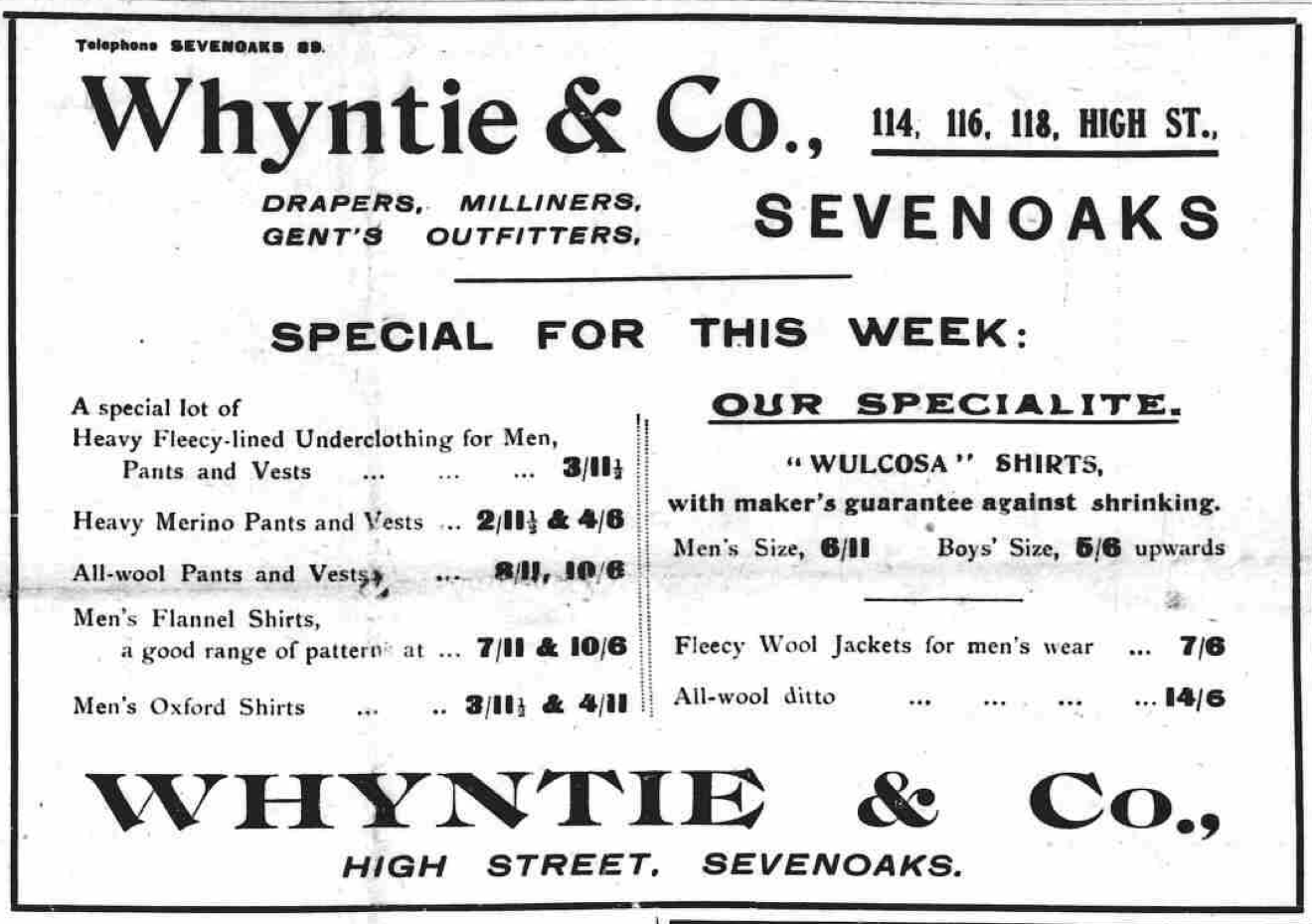
After the armistice, Jack continued to serve, for a time in the army of occupation, before he returned to the family business where he became a director and settled in Sevenoaks with his wife, Helen, and two children, Barbara (born 1923) and Brian (born 1925). A popular businessman, local resident and a keen follower of cricket, he was often seen watching a match at the Vine ground which overlooks the war memorial.

imageAn advert for Whyntie & Co, Sevenoaks Chronicle, 1922

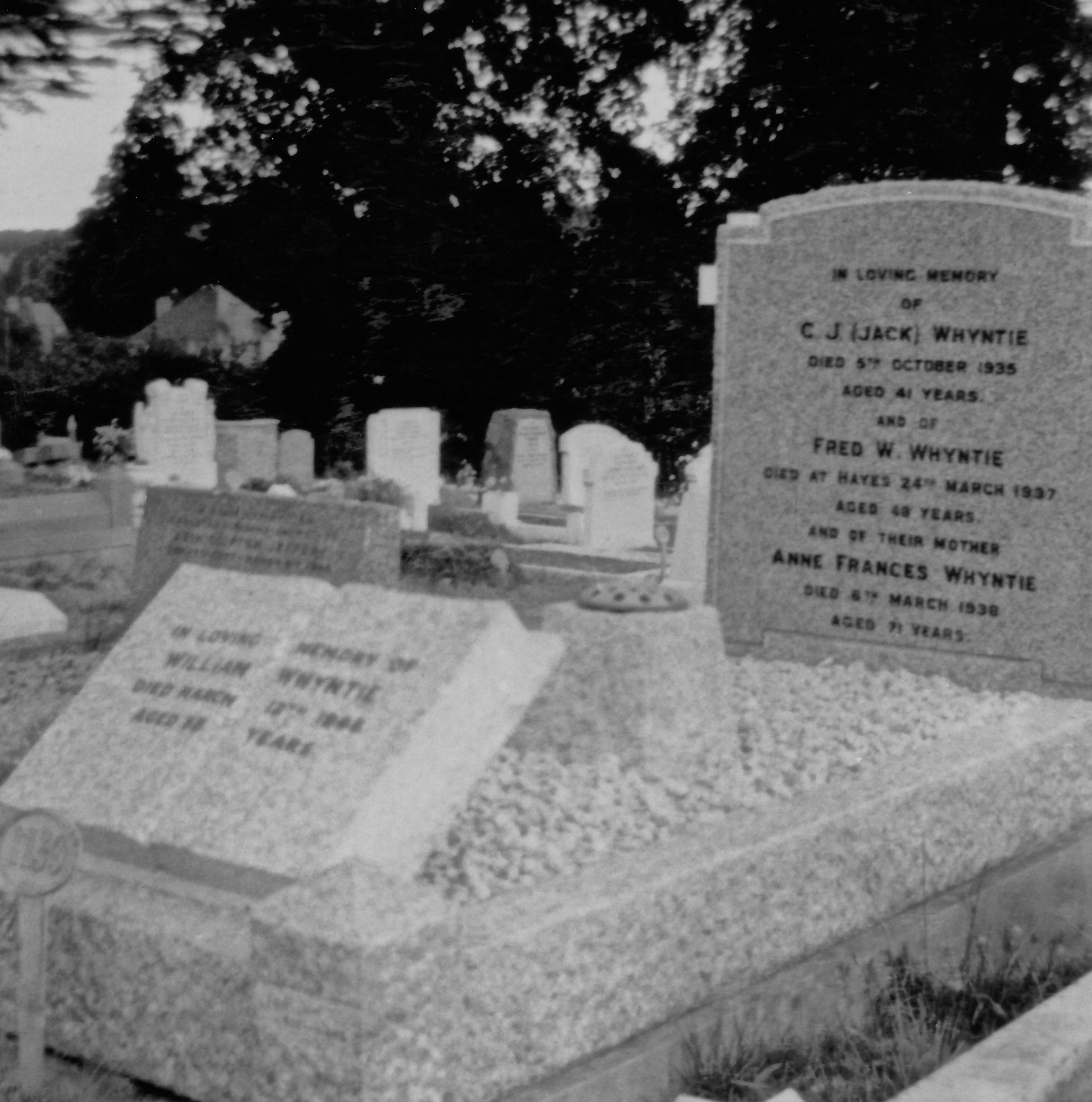
Jack Whyntie was taken ill suddenly when preparing to close the shop one Thursday evening in 1935 and died of meningitis on his forty first birthday on the following Saturday 5th October. He was buried in Greatness Cemetery. His brother Fred, who had served as an Air Mechanic during the war, survived him by only two years, dying in 1937, followed the year after by their mother, aged seventy one. William Whyntie, the patriarch of the family, lived on until 1948 when he died aged eighty eight and was survived by his daughters and grandchildren.

imageThe family grave at Greatness Cemetery

I am grateful to Jack Whyntie’s Great Nephew, Adrian, for sharing information and some splendid photos of his Great Uncle.

‘I can only say that his men loved him’: Geoffrey Harrison on the first day of the Somme

Second Lieutenant Geoffrey Harrison, Machine Gun Corps

Geoffrey Harrison is the fifth and last of the Sevenoaks men that were killed on the first day of the Battle of the Somme. His great nephew, Sir Michael Harrison, still lives in Sevenoaks and has written this account of the life of his great uncle, which is included in my book on the war memorial.

Geoffrey Harrison, my paternal great uncle, was born on 8th April 1896. His father was Bernard Bowles Harrison and his mother was Elizabeth Anne Harrison (nee Franks). In the 1901 Census, Bernard Bowles Harrison was described as a Master Printer. At the time of that Census, the family was living at ‘Hurstdale’ in Granville Road, Sevenoaks, a house which was built sometime between 1890 and 1896 and which is still standing today. The family at that time included Geoffrey’s older brother Bernard Guy (my grandfather, who later became Sir Guy Harrison), who was fifteen at the time, and his two sisters Winifrid Madge, then aged thirteen, and Elsie, then aged twelve. Geoffrey was the youngest, aged four. Guy Harrison married Cicely Vicat, sister of Horatio John Vicat and Frederick Holland Vicat, who are also remembered on the Sevenoaks War Memorial.

Geoffrey was educated initially by Miss Webb in Granville Road, Sevenoaks. He then went to a prep school called Beechmont in Sevenoaks where he was captain of the school. After that, he went to Rugby School in 1910. He left Rugby School in 1914 to go to University College, Oxford but shortly thereafter, on the outbreak of war, he enlisted in the Public Schools Brigade. Documents at that time record that he was 6’ 2 inches tall and weighed 160 lbs. He was described as having a fair complexion, blue eyes and blond hair.

In December 1914, he obtained a Commission in the 12th Battalion of the Hampshire Regiment, transferring later to the 13th Battalion. On 21st December 1915, he was transferred to the Machine Gun Corps (Infantry), and in April 1916 he left for the Front.

Screen Shot 2016-06-28 at 11.08.54Second Lieutenant Geoffrey Harrison

He was killed only a few months later on 1st July 1916 on the first day of the battle of the Somme (there is a telegram from the Army Council to his father dated 9th July informing him that Geoffrey was killed on 2nd July but that was corrected in a later document dated stating that there had been confusion between officers of the same name and confirming that Geoffrey had been killed on 1st July 1916).

The circumstances of his death were that he was leading his Section in ‘No Man’s Land’ at Contalmaison when he received a wound in the thigh. He gave instructions to his NCO to push on, when a shell burst and killed him. He was aged twenty.

Eleven days later a brother officer, GB Martin Scutt, wrote to Geoffrey’s mother.

My dear Mrs. Harrison,

‘I have been out of action ever since the first day of the attack, and only had my first news of the Coy. late last night, and with it the terrible news about Geoff. As you know we have been chums ever since we joined the Corps. and for the last six months have done everything together. Since we have been in France, whenever the officers had to be paired off for billets, etc, or an occasional day free, we two were together. This is a fairly stiff test of friendship, yet I can honestly say that no man could ever want a better pal, and throughout that close relationship I have never known him to say or do anything unworthy of the true Gentleman he always was.

Off parade and in Mess his classical allusions and quaint phrases kept us in constant good humour up to the last. He was everybody’s pal. On parade I can only say that his men loved him.

We said Good-bye to each other on the evening before the attack commenced at about 6.30 when he was in the best of spirits. As our sections were on opposite flanks I had no chance of seeing him during the action, and before we’d been moving a quarter of an hour I had a bullet through both lungs. I shall do my best to learn more details from those who were with him up to the last, if I get the opportunity – but I know there is only one way in which he could have gone out, and that is as a gallant officer and gentleman.

As I am sure you know, my sympathies go out in full to you and Mr. Harrison, and I feel much more than I can express.

If I succeed in learning anything that I think would interest you at all, I will let you know, or, when I am well enough, may I come and see you?

Until then, I remain,

Yours very sincerely,

G. B Martin Scutt

Geoffrey is buried in Ovillers Military Cemetery in the locality of the Somme.

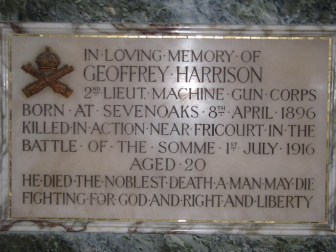
IMG_0346Memorial to Geoffrey Harrison in St Nicholas Church

There is a splendid plaque inside St. Nicholas’ Church, Sevenoaks, in memory of Geoffrey Harrison. It refers to him being killed in action near Fricourt in the Battle of the Somme on 1st July 1916, aged 20. ‘He died the noblest death a man may die Fighting for God and Right and Liberty’.

His name is also recorded on the Roll of Honour inside the church, as well as on the church War Memorial near the entrance to the churchyard. His name is also recorded on the Roll of Honour inside St. Mary’s Church, Kippington, Sevenoaks although not on the War Memorial outside.