Stories of the conscientious objectors in Sevenoaks

After the introduction of the Military Service Act in 1916, many local men appeared before the local Military Tribunal to seek an exemption from service and could appeal decisions to the West Kent Tribunal in Maidstone. I’ve written about some of these stories in a previous post. Many of these men were seeking exemptions on health grounds, working in a reserved occupation work or family commitments.

In Sevenoaks, and across the country, some men refused to serve on religious grounds. As conscientious objectors they stated that they could not take another man’s life. The Act allowed for objectors to be absolutely exempted, to perform alternative civilian service, or to serve as a non-combatant according to the decision of the Tribunal.

Around 16,000 men were recorded as conscientious objectors: 4,500 objectors were sent to do ‘work of national importance’ such as farming, 7,000 were given non-combatant duties, and around 6,000 were forced into the army, and when they refused orders, they were sent to prison.  However,  cases regarding conscientious objectors formed only around 2% of Military Service Tribunals’ cases.

As most of the files for conscientious objectors were destroyed in the 1920’s, I have had to rely on newspaper reports for information. I would be very interested to hear from any relatives of who might have more information on these men and what happened to them and their families following their decision to take such a stand.

Stories from the Tribunal

In March 1916, Charles Edward Farrant, 26, of 42, Cobden Road, was a cowman employed by Mr Mond at Combe Bank, and applied for absolute exemption on religious grounds. His case was supported by his employer, who stated that he was looking after pure bred stock. His exemption was refused and he was recommended for non combatant service.

Harold John Mann was a 22 year old schoolmaster of Heatherleigh, Dartford Road, employed at the New Beacon School. Mann stated that the religious views he had been brought up with prevented him from taking life in any circumstances. He also had to support his mother. In his case a temporary exemption was granted for three months.

Leslie Frank Hoad was living a 2 Gilehurst Villas, Argyle Road and had been employed as a draper’s assistant, when he appeared before the Sevenoaks Tribunal in September 1916. The fact of his conscientious objection was accepted without argument and Hoad stated that he had given up his job to work on agriculture near Swanley to demonstrate that he was willing to do something of which the country had need.

Screen Shot 2016-06-16 at 17.21.08The Sevenoaks Chronicle reported Leslie’s appearance before the local Tribunal

However, the committee refused to grant an exemption. He subsequently appeared before the West Kent Tribunal in January 1917. This Tribunal granted him an exemption for three months, conditional upon him remaining in employment on the land. Leslie was working as a motor tractor driver when next reported as having been granted a further four month extension when he appeared before the county Tribunal again in July 1917.

Alfred Mannington Sayers appeared before the Tribunal in June 1916 and pleaded guilty to a charge of not reporting himself for military service. Detective Coley gave evidence against Sayers, stating that he declined to go because he was a conscientious objector.   The defendant’s father, agreed that there was no doubt that his son was an absentee but argued that it was well understood that ‘the tribunals had not administered the Act’. The Chair denied this and highlighted the responsibility of the court to carry out the law; the defendant had been ordered to do something by a competent authority and had not done so. He went on to remark that

defendant might be a perfectly amiable young man and did not want to hurt anyone at all, not even his country’s enemies. The bench would accept that for him.

The court then imposed a fine of forty shillings and the defendant was handed over to a military escort.

De Barry Cox, aged 22, of 4, Barrack Corner, was another man arrested by Detective Coley for not reporting for military service on the grounds of conscientious objection. He was fined fifty shillings, which was to be deducted from his military pay, and handed over to the authorities.

Screen Shot 2016-06-16 at 17.04.30De Barry Cox served with the Non Combatant Corps

Jack Harbour a railway porter, of Greatness Terrace was similarly charged. Records for both Cox and Harbour survive, showing that each served subsequently served in the war with the Non Combatant Corps.

Herbert Sears was another conscientious objector who served with the non combatant corps. Sears had worked for the Rector of Sevenoaks, Revd. John Rooker, managing the rectory farm. He died in October 1918 of pneumonia and is buried in the churchyard at St Nicholas, together with his wife who died only days after her husband.

Harry Raven, 33, of Sunnyside, Clarendon Road, was the manager of a shirt making and hosiery business in Picadilly. Raven claimed to be

A true and consistent follower of the Lord Jesus Christ, whose commands he must obey. Thou shalt love thy God and thy neighbour as thy self

Raven was willing to do farm work, though he had no experience of it. The tribunal refused his case and recommended him for non-combatant service.

At the same hearing, James Samuel Bolton a married signwriter of Bradbourne Villas, Bradbourne Road stated ‘I hold it wrong to terminate human life unnaturally’.

Thousands, he added, were suffering innocently owing to the use of arms, which secured the victory to the stronger side, whether it was in the right or wrong. Bolton said that he was not a member of any religious body and pleaded that he was only able to keep himself, his wife, and family without being a burden to the community, and without being able to take part in philanthropic work. He remarked that he was not averse to agricultural, railway or police work. The tribunal refused the case and Bolton declared that he would exercise his right to appeal.

George Mullen appeared before the tribunal in June 1918. Mullen was the manager of a grocery business in St John’s for his employer, Mr Frank Rowley. Aged 44, he had been classified as grade 2 and his appeal had been supported by the Local Food Control Committee (by casting vote of the Chairman). A solicitor for Mr Rowley stated that he had had bad health for two years and had 700 registered customers for sugar. Mr Mullen had managed the business and been with him for 22 years. There were two other shops and the other manager was not fully qualified. It was revealed that Mullen was a member of the International Bible Students’ Association and conducted meetings at Tunbridge Wells. Mullen was questioned on the information that he had a son of eighteen serving in the navy, replying that he allowed his son to hold his own opinions.

Rowley’s solicitor argued that if Mullen were taken, the business would have to close down as he was not fit enough to run it on his own and he could get no one else capable to run it for him.The Tribunal dismissed the appeal but gave 56 days before call up in view of Mr Rowley’s condition.

Objectors at Greatness Farm

Many conscientious objectors worked on the farms in and around Sevenoaks. No doubt some of these men were local but others, such as  thirty-six year old Walter Flexman, had been a manager and buyer in the books and stationary department at Hamleys store in London. Flexman had lived on Brondesbury Road, North London, but in 1916 was resident at 11, Bethel Road and working for Mr Wood of Greatness Farm.

Walter Flexman had been granted a conditional exemption from combat service only in August 1916 and was offered work on the farm from the September, at a rate of three shillings day. In that December he was required to apply for a renewal of his exemption, which was supported by his employer on the farm, Mr Wood, who stated that after three months, Flexman was a real help on the farm; to lose him would be to lose valuable experience and require time in training new workers.

Screen Shot 2016-06-16 at 16.06.19Walter Flexman’s employer supported his case for renewal of his exemption

Walter Flexman was granted a renewal. At around the same time, his employer, Mr Wood appeared before the local Tribunal in the case of a Mr Cheeseman, a worker on the farm. Cheeseman was described as a skilled farm labourer. Mr Wood stated that there were six conscientious objectors on the farm but they were not skilled farm hands and had taken the place of other men who had gone to fight.
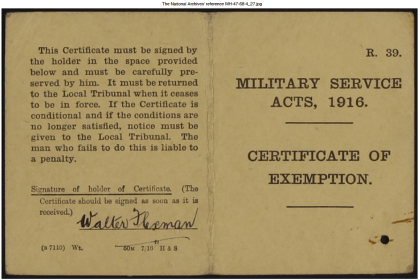
Screen Shot 2016-06-16 at 16.16.06Walter’s certificate of exemption

A committee member asked how they men worked, to which Mr Wood’s reply was laughter and Mr Cheeseman was given a conditional exemption.

Local hostility

On the limited evidence available, the Sevenoaks Tribunal appears to have conducted its hearings in a business like way. Few men who appeared before it as conscientious objectors were granted complete exemptions. More often cases were dismissed and the applicant recommended for non combatant service. There is little evidence of local hostility toward conscientious objectors and their families but this must have existed. No doubt individuals and their families were ignored, given white feathers and viewed with suspicion by those whose friends and relatives were serving.

Public opinion generally viewed conscientious objectors with suspicion and disdain and the Sevenoaks Chronicle did occasionally carried criticism of conscientious objectors, from printing popular jokes to reporting the speech of the Earl of Denbigh when he visited Sevenoaks in January 1918.According to the Earl

We should spare no effort to make the women understand the things the Germans did. Let the women of Kent think about it, because probably they might be the first to feel it. If the British women knew and realised one quarter of the German ideas; they would see to it that no conscientious objector would dare to show his contemptible face in the public street.

Occasionally, the paper also printed criticism of objectors from serving soldiers. Rifleman H Woodfine from Hither Green, wrote a letter from Salonika in June 1916, which was printed in the Chronicle (the writer’s link to Sevenoaks is not noted). Woodfine wrote

The boys are making huge fun of the conscientious objector. In the times of Nelson and Wellington, such people would be shot. They ought to go and see places like Mons, Ypres, Louvain, Rhiems, and Alsace. I think this would alter their attitude.

After the Armistice, a concerned parent wrote to the paper, indignant at the thought that the rights of conscientious objectors would be put before those who had served.

Dear Sir

I saw in your last issue an appeal from one of the Territorials in India. I myself have a son serving there, who has been away for the past four years and a half, and who is anxious to return. The idea of releasing conscientious objectors before the man who has done his duty! I hope this will meet the eyes of those who shouted for the men to join! Are they still shouting to get them released?

Yours faithfully,

A DISGUSTED PARENT

Conscientious Objectors were still viewed with suspicion after the war and were not allowed to vote until 1926. However, many of the objectors from Sevenoaks appear to have carried on living and working in the community after the war. George Mullen took over his former employer’s shop when Frank Rowley died in 1922. During the Second World War, Alfred Sayers published a collection of poetry – Poems of 20 years, that the Chronicle featured prominently, which suggests that by then he was viewed as a respected member of the local community.

It would be interesting to hear from anyone with more information on any of these men who took the difficult and principled decision not to fight.


Sevenoaks men at the Somme: stories from the first day

Five men from Sevenoaks died on the first day of the Battle of the Somme – 1st July 1916. Although the anniversary of the battle is still a few weeks away, July will be a month filled with similar stories and I thought that it would be nice to write about each man in the days leading up to the centenary.

Three officers were killed on that day – Second Lieutenant Geoffrey Harrison of the Machine Gun Corps, Captain George Henry Heslop of the Middlesex Regiment, and Lieutenant Edouard H A Goss. The two ordinary soldiers who died were near neighbours from the St John’s area of the town.

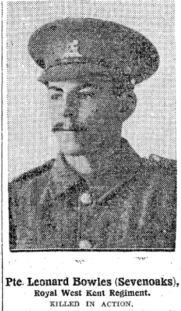
Private Leonard Bowles, G/2217, 7th Battalion, The Queen’s Own Royal West Kent Regiment

Leonard Bowles was born in 1888,  the son of William, recorded as a gardener in the 1891 census and his wife, Alice. The Bowles family had lived variously at 6, Cobden Road, on Hartsland Road and at 11, Bethel Road, where, like his late father, he was recorded as a gardener in the 1911 census. Leonard had returned to the Front from leave a fortnight before his death.

IMG_1221

Three of his other brothers,Lawrence, Clifford and Reginald, were also serving in the 7th Battalion of the West Kents, as was their one-time neighbour Jack Lewis. Lawrence Bowles was killed two weeks after his brother on 13th July.

Private Jack Lewis,  G/3418, 7th Battalion, The Queen’s Own Royal West Kent Regiment

Jack Lewis was born in 1895, the son of Jack, a plumber and his wife, Maria, and grew up at 5, Cobden Road. By 1911, Jack was working as a plumber’s assistant, most likely with his father. Jack enlisted in September 1914 and served with the Royal West Kents, being sent to France in August 1915.

IMG_0777
Private Jack Lewis

Fred Gilks his friend and neighbour from Sevenoaks, also from Cobden Road (who was killed only two weeks later on 13th July), wrote home describing what had happened

‘Jack and I both got over safely on the day of the attack. Next day, which was Sunday July 2nd, the Germans shelled the trenches we had captured. Poor old Jack was standing near me when a piece of shell hit him. He turned to me and said: ‘I am done, Fred’ and then dropped. I am thankful to say that he did not suffer at all, but passed away quietly…he was a chap to make a lot of friends as he was always so lively and good natured’.

Second Lieutenant Arthur Hogg wrote to his parents

‘As his platoon commander I can say that he was always cheerful and good natured and very popular with all the platoon. He is a great loss to us and we are all sorry he is gone. He lost his life in a battle which is probably the greatest in our country’s history and he did his duty’.

Despite Fred Gilks’s account, all official records give Jack Lewis’s death as 1st rather than 2nd July. Both Leonard Bowles and Jack Lewis are remembered on the Thiepval Memorial.

A further eleven Sevenoaks men died that July, including, Fred Gilks among them,  another four from Cobden Road.

Stories of the men buried in Sevenoaks

The Commonwealth War Graves Commission estimates that there are 300,000 war graves and memorials in the UK.

The Commission lists five graves at St Nicholas, Sevenoaks, which I’ve written about in an earlier post and it seems a timely moment to write about the sixteen First World War graves at Greatness Cemetery. The Town Council has produced a booklet which shows the location of these graves at the cemetery (and which also shows the graves from the Second World War).

Six of these men are remembered on the town war memorial and I’ve written about them in my book. Their stories are included below along with the other ten.

Some of these men were evacuated home to Sevenoaks and died from their wounds. Others were taken ill unexpectedly or died accidentally, not having left the UK. Others were billeted here and died from their wounds or disease and were buried locally rather than returning to their homes for burial. Three of the deaths occurred after the end of the war.

As ever, I welcome any comments that can add to our knowledge of these men, especially from family members.

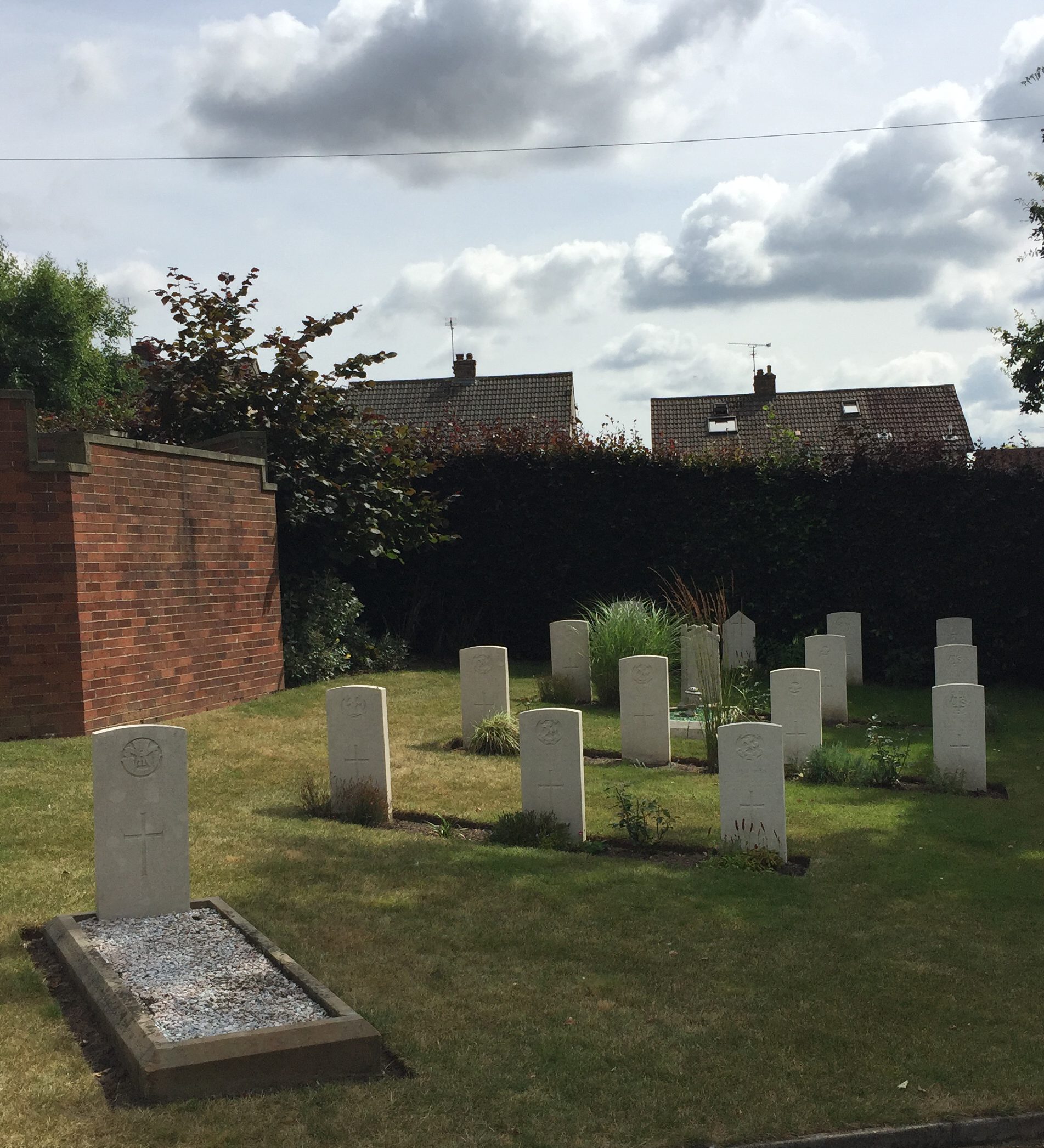
imageCommonwealth War Graves and others at Greatness Cemetery

Sapper James Galligan, 6659 1st Field Company, Royal Engineers

1882 – 4th November 1914

James Galligan was from St Helens, Lancashire, the son of Peter and Elizabeth. The 1911 census records him as a 29 year old at home with his wife, Sarah Ann and two young sons: William aged four, and Peter, four months. James served with the No.1 Co West Lancashire Company of the Royal Engineers. He is recorded as dying of natural causes at the Amherst Arms, Riverhead, (now a Harvester) near Sevenoaks. There does not appear to have been a report of his death in the local paper but he was the first soldier to be buried at Greatness Cemetery. He is remembered on the Roll of Honour in his home town.

Harry McCarthy, Private 14889, 2nd Battalion, The Duke of Cornwall’s Light Infantry

1893 – 6th April 1915

Harry McCarthy was born at Shinecroft Cottages in Otford, the third of nine children of John Richard McCarthy, a railway worker, and his wife, Sarah Ellen. Prior to the outbreak of war, he was listed as being a laundryman on the 1911 census. By that time the family was living in Moor Road, Sevenoaks.

The Sevenoaks Chronicle recorded Harry’s funeral in some detail

“ A most impressive spectacle was witnessed on Saturday at Greatness Cemetery, when, with full military honours the mortal remains of Pte H McCarthy, 2nd Duke of Cornwall’s Light Infantry, were laid to rest in the site which has been set aside by the Sevenoaks Urban District Council for the burial of natives and former residents of Sevenoaks or inhabitants of the town who have taken part in the Naval and Military Expeditionary Forces of the Crown.

Deceased, who was only twenty one years of age…enlisted, leaving a situation on the railway at Erith in September last. After some six months training he was drafted to the Front on 11th Marchand took part in the battle of Neuve Chapelle where he was wounded in the spine. McCarthy was taken to a hospital at Boulogne and then to Folkestone where he expired on Tuesday last”.

IMG_6524
Private Harry McCarthy

Harry’s coffin was covered with the Union Jack and borne from his home in Moor Road on a gun carriage by a team of six horses and preceded by the band of 5th Kings Own Royal Lancaster Regiment, which played the Dead March from Saul and Chopin’s Funeral March.

According to the Kent Messenger:

“The treble singers with Mr Neave and Mr Meeks of St John’s Church Choir sang the hymn “On the resurrection morning” at the graveside, after which a firing party from the 2nd 5th King’s Own Royal Lancashire Regiment fired three volleys over the grave and the “Last Post” was sounded”.

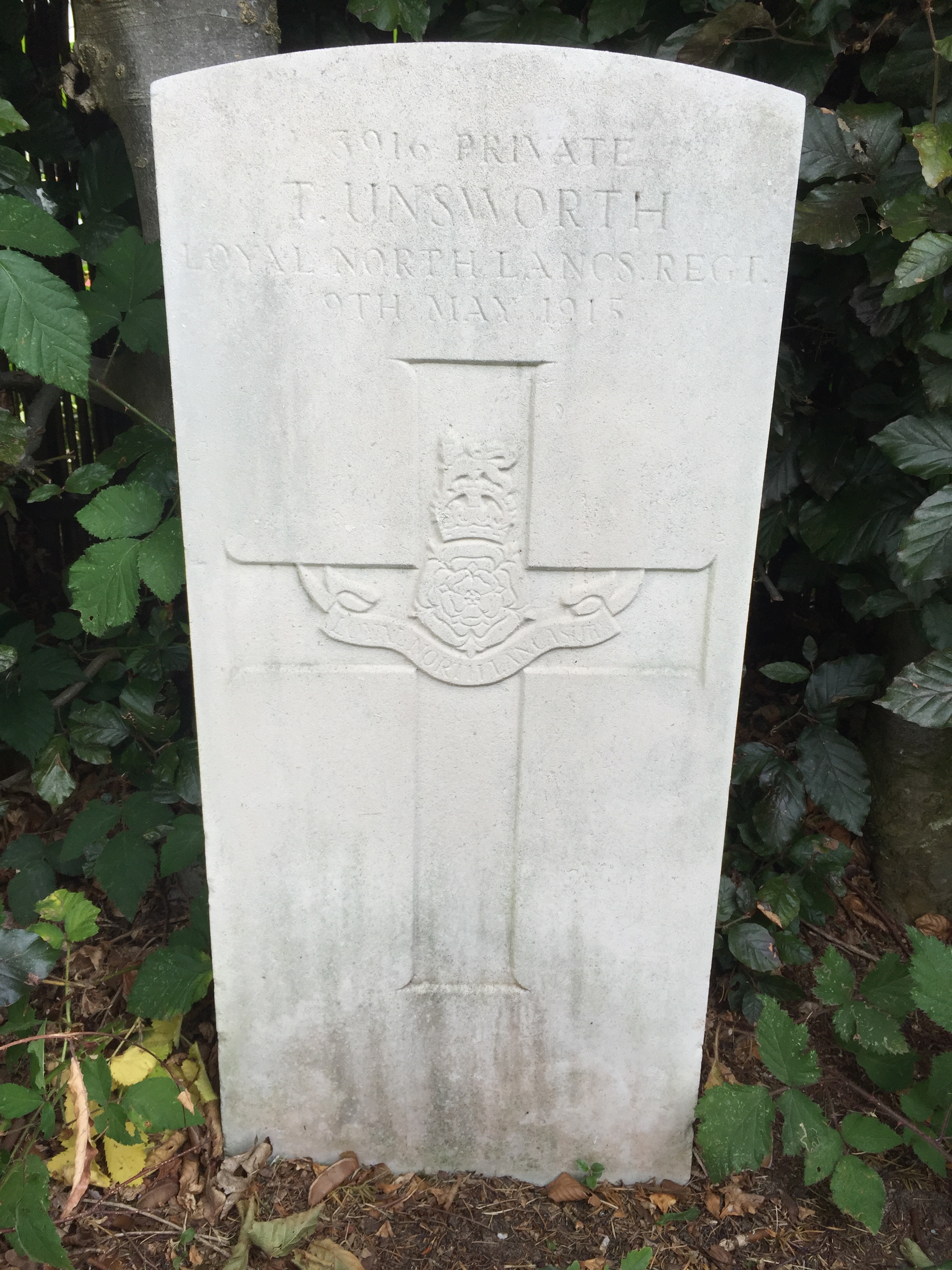
Private Thomas Unsworth, 3916 2/5th Battalion The Loyal North Lancashire Regiment

1896 – 9th May 1915

The Sevenoaks Chronicle reported details of the inquest into Private Unsworth’s death on Friday 14th May 1915. According to John Bellows, a fellow soldier in the same regiment, the two men had decided to cycle to Oxted together. Bellows was riding behind Unsworth when he saw him fall as his bicycle slipped on the road, which, despite being fairly straight and flat, was greasy because of the soft tar. Private Unsworth was dragged about ten yards by the bike before two men of the Royal Army Medical Corps picked him up; they carried him to a nearby house where an ambulance was sent for and he returned to Sevenoaks.

imageGrave of Thomas Unsworth

Unsworth was admitted to the Hospital at Cornwall Hall where he was examined by Dr Mansfield. In his testimony to the inquest the doctor stated that Unsworth was concussed and unconscious, having a bruise on his forehead and one on the back of his head. Private Unsworth never regained consciousness and died from a haemorrhage caused by his fall in the early hours of the following morning.

The funeral was held with full military honours and the coffin was conveyed to the council offices by B Company of Private Unsworth’s regiment, where it was transferred to a gun carriage and carried to the cemetery. Three volleys were fired and the Last Post sounded as he was laid to rest.

Private George Francis Fitzwalter Benest, 2877 2/4th King’s Own (Royal Lancaster Regiment)

1896 – 25th May 1915

George Benest was born in Bebbington, Cheshire, in 1896. He was the son of George and his wife, Gwitha. He enlisted at Ulverston, most likely in August 1914, and was based in Sevenoaks with his regiment when he died at Tonbridge Hospital. He is remembered on the war memorial at Broughton-in-Furness.

Ernest Edward Mitchell, Leading Stoker, K/13729, HMTB 11, Royal Navy

2nd April 1886 – 13th March 1916

Ernest Mitchell was born and grew up in Beckenham, the son of William, a bricklayer and his wife, Laura. Ernest married Lilian Charlotte Tolhurst on 11th November 1908 at Wandsworth and the couple went on to have four children, Ernest, born 1906, Dorothy Ellen, born 1909, William Louis, born 1915 and Alfred James, born 1917.

imageGrave of Ernest Michell

His records show that he was working as a printer’s machine minder when he joined the Royal Navy on 2nd April 1909. He served first on the Nelson and then the Jupiter and the Prince of Wales before becoming a Stoker on 24th January 1912. Ernest was serving on HM Torpedo Boat 11 when he was killed as a result of enemy action.

Regimental Serjeant Major Ernest Alfred Bence, L4803 2/9th Middlesex Regiment

1879 – 29th April 1916

Ernest Bence was found dead by his colleague, Company Sergeant Major Henry Charles Thorn, on 29 Aril 1916, having apparently shot himself with his revolver. According to newspaper reports, Thorn had gone to see if Serjeant Bence was coming for his dinner at around 14.30. No one had heard a shot being fired but he testified that his fellow Sergeants had been in the mess and there was generally a lot of noise. The inquiry heard how Bence had recently been arrested for a disciplinary offence but nothing had yet been proved; his conduct was generally good and if he had been found guilty, the punishment would have been light, not more than a demotion to Sergeant.

imageThe Sevenoaks Chronicle carried a detailed report of the Inquest

Lieutenant Quarter Master W R Shepherd had known Serjeant Bence well and gave evidence to the inquest that Bence had been practicing cleaning his revolver recently, and some cleaning materials were found on the scene. His body had been discovered lying on his back with his head underneath the bed and a bullet wound to his left breast. His revolver was lying on a table with its butt toward the bed and had been issued to him at the end of March as part of his kit. According to the newspaper

It seemed from the position of the chair and the body that the deceased had been “fiddling” or “playing” with the revolver. It was not customary to have it loaded but the deceased had only been issued with ammunition recently…Before deceased was a Company Serjeant he was a Colour-Sergeant and they did not carry revolvers. Deceased was a thorough man and a good soldier, but he did not think he would understand a revolver.

Second Lieutenant Bryan reported that within the last 10 days he had been together with the deceased practicing revolver shooting when, after firing off several rounds, Serjeant Bence had reloaded his revolver when it had suddenly gone off and hit the ground yards away ‘the pull-off being very light’.

Serjeant Bence’s widow, Annie Maud Wywne Bence, who resided at the Drill Hall at Staines, stated that she had last seen her husband when he had visited Staines a fortnight before his death when he had appeared in his usual health, with nothing appearing to trouble him, his usual disposition being “happy and bright”.

Dr Brown who examined the body stated that the deceased had died from syncope as a result of internal bleeding, having shot himself, at the table at very close range.

An open verdict was recorded and Serjeant Bence was buried with full military honours at Greatness.

George Bernard Taylor, Private G/12547, 7th Battalion, The Queen’s Own Royal West Kent Regiment

1889 – 26th July 1916

George Taylor was the son of William, a house painter and his wife, Mary of 4, Cobden Road.

The 1911 census shows George working as a gardener, while a few years later his service papers show that he was working as a plumber when he enlisted in 1916. He was confined to barracks for five days for ‘Improper conduct on the line of march’, while stationed at Fort Darland in Kent. He arrived in France that June, joining his Battalion on 6th July.

imageGeorge Taylor’s grave on the hundredth anniversary of his death

On 13th July George received a gunshot wound to his left leg, resulting in fracture and gangrene. He was evacuated from France to the 1st Birmingham War Hospital, where he died as a result of his wounds on 26th of July 1916. He was buried at Greatness Cemetery and the Kent Messenger carried an account of the funeral in its edition on 5th August. The 2/7th Devon Regiment provided a firing party and funeral bearers.

George Taylor is the only man buried in Greatness to have died from wounds sustained during the Battle of the Somme.

Henry Ramsdale, Private G/13035, 3rd Battalion, Royal Sussex Regiment

1875 – 17th October 1916

Henry Ramsdale was born in Sevenoaks to Silas, a coal seller of Cobden Road and his wife, Sarah. By 1891 the family had moved to Bethel Road and Henry was working at the local laundry. He married Clara Jane Pickering in 1900 and the 1901 census shows the couple living on Golding Road and both working in the laundry. Ten years later and the couple are living with their five daughters on Sandy Lane.

imageGrave of Henry Ramsdale

Henry enlisted in Sevenoaks and joined the Royal Sussex Regiment. His service records have not survived but the Kent Messenger reported that, having enlisted in June 1916, he was sent to France in September and was taken ill while crossing, being sent to hospital in Calais on arrival. He stayed for four days before being sent to hospital in Birmingham but was discharged and returned home, dying shortly after. The paper recorded that he had never been a strong man and there had been surprise when he was passed fit for active service.

Private Herbert Thomas Lloyd, 2439 Dorset Yeomanry (Queen’s Own)

1892 – 30th January 1917

Herbert Lloyd was born in Westerham, to George and Elizabeth. The Sevenoaks Chronicle reported in its 2nd February edition that Private Lloyd was a shoeing-smith who had recently transferred from the West Kent Yeomanry to the Dorset Regiment. He had died of a cerebral haemorrhage. A military funeral was held and three volleys fired over his grave. It is likely that he is the Herbert Lloyd remembered on the war memorial at Hastingleigh.

Major Edward Stigant Carruthers,  Royal Engineers

1866 – 16th May 1917

Edward Carruthers was born in Chatham in 1866. An Inspector of Works with the Royal Engineers, he had returned to Sevenoaks in May 1917 to attend the funeral of his late father, who had died aged 86. The funeral was held in Chatham and, after returning to Sevenoaks, Major Carruthers was taken ill and died suddenly that evening at his home, The Laurels, on St John’s Road. The funeral was held on the Saturday when, according to the Chronicle, large bodies of men from the Essex Yeomanry and the Hertfordshire Yeomanry followed the cortege to Greatness Cemetery, preceded by a firing party, and the band playing Handel’s Dead March.

Frederick George Dobson, Private 13169, Royal Army Service Corps

1874 – 7th July 1917

Frederick Dobson appears to have been born in Margate in 1874. His army pension records show that he was working as a hotel porter when he first enlisted with the army in 1895 aged twenty, going on to serve as a Gunner with the Royal Artillery. He served in India and had a good service record until he was invalided out of the army in 1901 on health grounds. He reenlisted in 1915 when he was nearly forty one and was sent to France and served with the Army Service Corps.

Frederick reported sick in 1916 and was diagnosed with a gastric ulcer and discharged as unfit for further active or home service. He died the following year, aged forty three and is buried in Greatness cemetery.

Serjeant Arthur Sidney Piper, 200044 Queen’s Own (Royal West Kent Regiment)

1876 – 28th August 1918

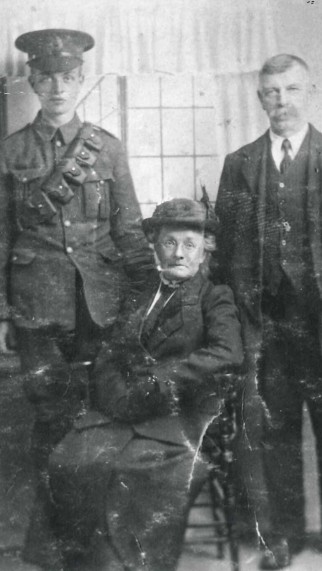
Arthur Piper was born in Hildenborough, the son of John and Charlotte.  Arthur served as a territorial from 1908 and had been employed as a railway guard for several years. During the war he served in India from March 1917 until January 1919.

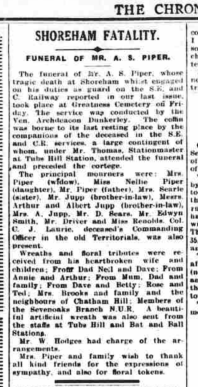
imageHow the Sevenoaks Chronicle reported Arthur’s funeral

Described in his obituary as a popular NCO in the Territorials, he was demobilised only months before his death. Arthur was killed in an accident during the routine shunting of trains at Shoreham station. The inquest reached a verdict of accidental death but how it was caused remained unknown.

Gunner John Thomas Fisher, 83338 Royal Garrison Artillery

1881 – 17th October 1918

John Fisher was born in Spitalfields, the son of John and Annie. He was married with three children and working as a clerk when he enlisted in May 1916. During the war, John served at home with the Anti Aircraft Artillery. He had been a patient at the Cornwall Hall Hospital with pneumonia since September 1917. Gunner Fisher had lived at Clerkenwell, London and  was survived by his wife and family.

Reginald Frederick Sudds, Lance Corporal 204838, 1st Battalion, Devonshire Regiment

1896 – 16th December 1919

Reginald Sudds was the third son of Edward, a coachman and his wife, Annie, who lived at 46, Cobden Road. By the time he was fifteen, Reginald was working as a bottle washer in a local brewery.

He appears to have enlisted in 1915, first with the Royal West Kents and later serving with the Royal Devonshire Regiment, where he reached the rank of Lance Corporal. He served in the Dardanelles as part of the Gallipoli campaign, and then in Egypt. He died in December 1919 not of wounds but of an unspecified disease contracted while abroad, and was buried in Greatness Cemetery.

Private William Fuller, L/14263 Queen’s Own (Royal West Kent Regiment)

1889 – 5th July 1920

William Fuller was the second son of Mr & Mrs John Fuller of Chatham Hill Road, Bat and Ball. William had enlisted in September 1906 and his records show that he was 18 years and 9 month, being just over 5’4 tall with grey eyes and brown hair.

His records note that his conduct was indifferent, while also recording that he was hardworking. Numerous drunken incidents and absences appear on his conduct sheet throughout his years of service.

William was sent to France with the Expeditionary Force on 13th August 1914. He returned home after forty six days, on 29th September and did not return to the Front until two years later in September 1916. After the war, he sought to reenlist and, despite his previous conduct, it was noted on his application that he was

A very smart and intelligent man; has previously served 13 years Colour Service and wishes to reenlist to complete 21 years service in order to qualify for a pension.

imageGrave of William Fuller

He was stationed at Maidstone and died at the Fort Pitt Military Hospital in Chatham of pneumonia. A private rather than a military funeral was held, in accordance with his family’s wishes.

Corporal George Thomas Slade 9656 Queen’s Own (Royal West Kent Regiment)

1893 – 1920

As yet, I have not been able to find much information relating to Corporal Slade. He served with the 2nd Battalion Royal West Kents from 1915 in Asia.