Conscription Cases – Sevenoaks Men at the West Kent Tribunal

After the introduction of conscription in 1916, men between the ages of 18 and 41 became eligible for military service. A network of Military Service Tribunals were established to hear the cases of men who wished to be exempted from being called up. Although approximately 2000 tribunals operated across the country, few records survive, which is why the records of proceedings as reported in local papers are invaluable. Some men appealing were conscientious objectors, while others were seeking exemptions because they worked on the land, cared for family members or worked in reserved occupations.

Members of the Tribunal were usually drawn from the ranks of the middle classes who would hear each case before deciding on its merits. The person appealing could be represented by a solicitor or even a relative or employer and both the applicant and military representative had the right of appeal to a further tribunal. The Kent Messenger reported that nearly twenty cases from the Sevenoaks division came before the West Kent Appeal Tribunal in Maidstone in November 1916. These cases were appeals against prior decisions at a local tribunal.

The Messenger noted that the panel included Earl Amherst and Sir Mark Collet and detailed a number of the cases concerning residents from Sevenoaks from all walks of life. From orchid growers and veterans of the Boer War, to one man who was subsequently killed in action and remembered on the Sevenoaks war memorial, the Messenger reported their cases, some of which caused some laughter at the time.

imageHow the Kent Messenger reported on the Tribunal

Charles Digby Robertson, 40, of the Rose and Crown Hotel, who was represented by Mr Brennan asked for time in which the wife could be educated in conducting the business. Appellant, who quite recognised that he would have to join the army, had only been at the hotel about a year and previously he kept a public house at Wrotham.

Thinking the wife must already have squired some experience, the appeal was dismissed, but directions given that Mr Robertson should not be called up before December 15th.

The tribunal dismissed the appeal of Caleb Newman, 39, of the Greyhound Hotel, Sevenoaks, but in order that he may arrange his affairs, they directed that he should not be called up for a month. Mr H J Brader, who represented the appellant, elicited that he was classified B1, that he served in the South African War, receiving the medal and five clasps, and afterwards remained in the South Africa Mounted Police for three years.

The case of John William Terry, 18, working for his father, a Sevenoaks farrier, was dismissed, although the Local Tribunal (had) described it as ‘a hard case’. It was stated that eight blacksmiths had left Sevenoaks for the army and munition work, and that Mr Terry’s other son, having joined the colours he took this lad from the butchering trade to assist him in the farrier’s shop.

Robert James Buckle, single, orchid grower for Mr Phillips, Sevenoaks, was represented by Mr Knight, who called in question appellants ability to serve in C1, to which class he had been allocated. He produced a certificate from a local doctor, showing that for sixteen years he had suffered from varicose veins, which were very bad now. The panel declined an invitation to view the appellants legs for themselves and dismissed the appeal, stating that while it was true C1 men were being called up, he would undergo another medical examination on joining the colours.

Mr M Blake sought exemption for his cowman, Albert Elvy, 32, single, Dunton Green, and said if the man left he should be compelled to reduce his herd. He stated, in answer to questions, that he did not think it right to ask ladies to do continuous milking, and to laughter said that one he did employ was kicked by a cow, and would not come again!

Bert Wallis, was appealed for by his father, a builder in Sevenoaks. The Local Tribunal had suggested that Mr Wallis snr and with his clerk could manage the business, but this Mr Wallis denied, saying it was quite impossible for the clerk to do the work of his son, which included the preparing of estimates, and getting out quantities etc. Already eight of his employees had joined the army. This case also saw an exchange which provoked some laughter

Sir John Matthews: How many builders are there in Sevenoaks?

Mr Wallis: Oh! The place is eaten up with them

Sir John: Why don’t the builders of Sevenoaks cooperate then?

Mr Wallis: We are too much at variance for that!

Percy John French, single, a hairdresser, Sevenoaks, asked for a few months’ respite so that in the meantime he could give further training to his brother, who could then carry on the business while he was away. It transpired that this brother was originally apprenticed to the business, and after serving for some time, he joined the army, but was discharged ten months ago and had since been assisting in the work of the barber’s shop. The Tribunal declined to interfere with the decision of the Local Tribunal beyond directing that appellant should not be called up for a fortnight.

Mr House, defending stated that he understood that the commanding officer of the Essex Yeomanry, who was stationed near Sevenoaks, was willing to take appellant as regimental barber, which would allow him the opportunity of keeping eye on his own business. The Chairman said that they could not do anything in that direction.

Ernest George Palmer, 32, caterer, of 98, High Street, Sevenoaks, caused some amusement by the way he referred to his wife. Asked if he was married he replied in the affirmative and then enquiry was made as to his children, he said that he had none, adding ‘I have a large wife and a small family!’

The Chairman: I thought that you said you had no children

Mr Palmer: No, I have not. Palmer went on to state that although he was originally rejected, he had now been passed for general service, notwithstanding the fact that he was deaf in one ear.

The chairman: Could not your wife manage this catering business?

Appellant said that he did not think so, as a man was required, seeing there were many soldiers about and they had already had trouble with them. He added, to laughter:

You see my wife cannot get about as quick as the soldiers!

The Tribunal dismissed his appeal but gave instructions that he should not be called up before December 31st.

The Messenger also reported some cases heard in the Sevenoaks Urban Tribunal whose members included the Chair, J.F. Carnell (whose brother, Francis George Carnell was killed at Gallipoli and is remembered on the Sevenoaks war memorial) along with Frank Robinson (whose son Frank and nephew, Herbert Lethebe are also remembered on the town memorial).

W A Taylor, of Varennes Lodge, South Park, organist at St Luke’s, and music teacher at the Beacon Schools, said he was 41 years of age on June 24th, the day appointed by the military authorities in fixing the age limit. Had he been born an hour earlier he would have been exempt (laughter). The application was refused on the understanding that Mr Johnson would write to the recruiting officer asking him not to call upon Mr Taylor before the end of the school term.

Mr De Barri Crawshay, of Rosefield, Sevenoaks, applied for his son, Lionel Crawshay and said that he (the father) was appointed transport officer to the VAD hospitals in 1915, when here were eight hospitals with 244 beds. The number had now increased to ten hospitals and 400 beds. The son was his chief assistant. He also appealed on the grounds of his son’s ill health, but it was stated that he had been passed for general service. One month was allowed but the Tribunal, while appreciating the service thus rendered, were of the opinion that an older man could do the work.
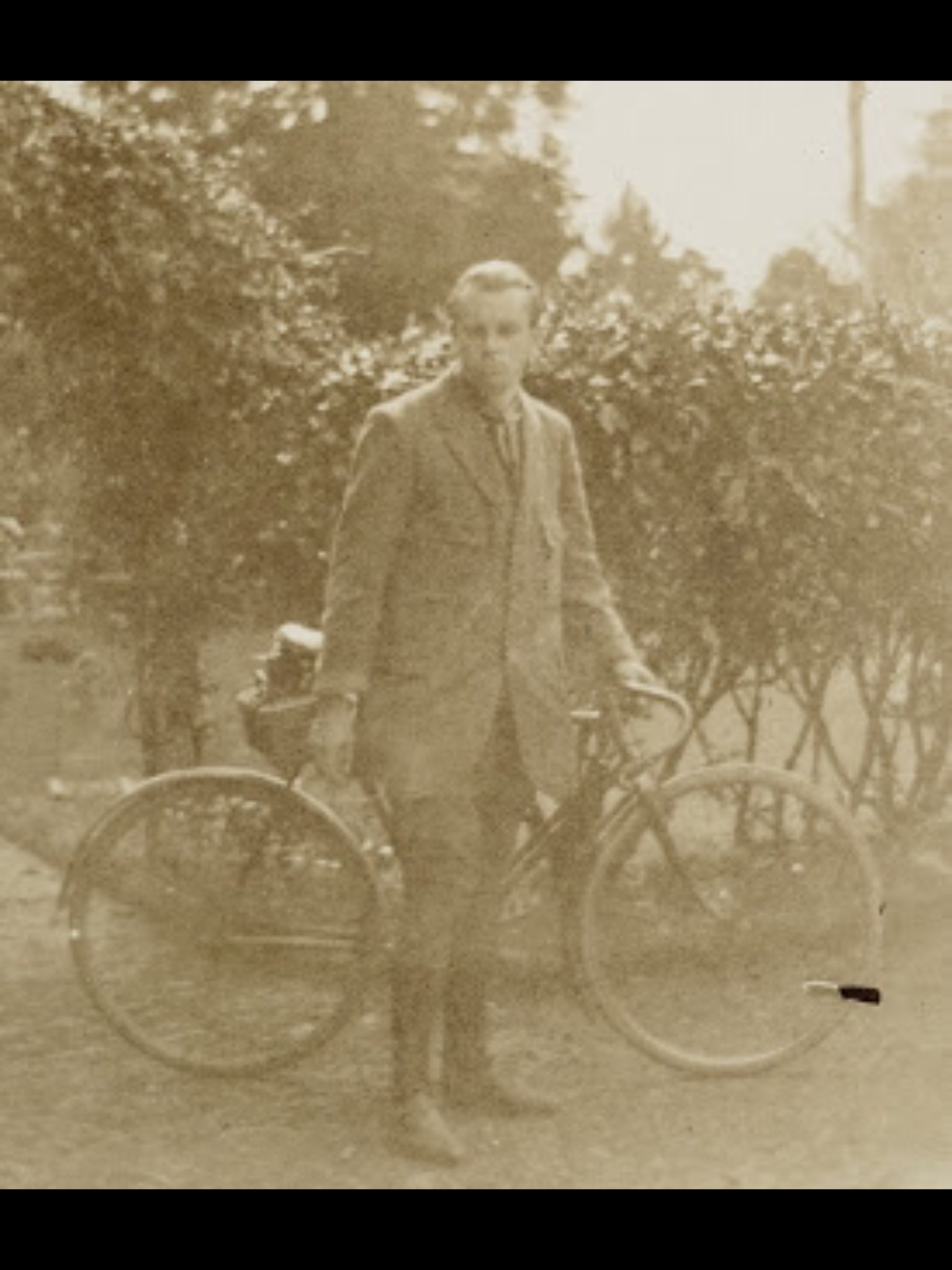
imageLionel Henry De Barri Crawshay

Lionel Crawshay subsequently enlisted in Maidstone on 28th December 1916, first with the Reserve Battalion of the 2nd Life Guards at Windsor, later transferring to 2/4th Battalion, The Queen’s Royal West Surrey Regiment. Crawshay was later one of fifty men selected to be sent to Egypt, with a view to receiving his commission. He was sent initially to France, spending a few days in a rest camp before embarking for Egypt on board the hired transport ship the SS Transylvania. The Transylvania was sunk by a torpedo on 4th May. Lionel, along with 400 others, drowned. His body was recovered and he was buried in the Savona Town Cemetery, which contains the graves of many of those who drowned with him.
 

Jack Marshall – saved by his pocket watch

Earlier this year, I was pleased to hear from Tim Marshall. Tim is a Great Nephew of George Marshall, one of the fallen of Sevenoaks of the First World War and one of several of the men who had lived on Buckhurst Avenue in the centre of the town. George Marshall had emigrated to Australia in 1912 with his friend Arnold Jarvis. Both had previously been pupils at the Lady Boswell’s school and sailed for a new life together on board the Ionie. Another Sevenoaks ANZAC, Kenrid Davey, was also on board and I wonder if they were known to each other. George Marshall died from wounds sustained, according to a report in the Sevenoaks Chronicle of 27 July 1917 by

…the accidental bursting of a bomb. Deceased, who left Sevenoaks for Australia about five years ago, joined the Imperial Force last year. In April last, he was married at Kensington and afterwards spent some days in Sevenoaks. Private Marshall is a brother-in-law of Mrs Marshall, whose husband is with the colours in Mesopotamia. Another brother of Private Marshall’s is serving in France whilst Mrs Marshall has seven brothers in the army, the eldest of whom has been a prisoner of war in Germany since the battle of Mons, in which he was wounded.

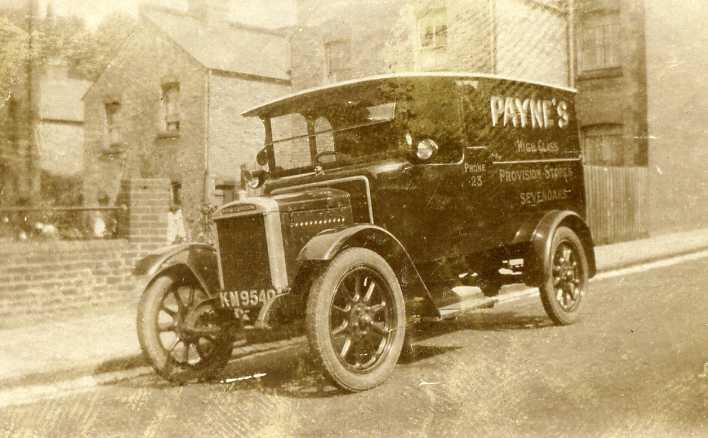
Tim Marshall’s grandfather, Harry, was one of the brothers mentioned, serving with the Army Service Corps in Mesopotamia. Harry, who before the war had worked for E.J. Payne, a grocer (now the site of the Sun Do restaurant), was himself mentioned in the Chronicle when he was hospitalised as a result of an accident, later making a full recovery. Harry served as a Verger at St Nicholas church and died in 1937 aged 58.

imageHarry’s delivery van, parked in Buckhurst Avenue

The other brother mentioned in George’s obituary, John, known as Jack, was 29 and working as a gardener at the Royal Crown Hotel in Sevenoaks, when he enlisted in December 1915. He served with the Royal West Kents

Jack was wounded in early 1918 and invalided home to England to recover before returning to action. Later in the August, the Sevenoaks Chronicle carried a news report detailing how Jack had again been wounded. As the paper noted,

This is the second time that he has been wounded and but for a remarkable circumstance his wound on this occasion would undoubtedly have been fatal. It appears that in returning to France, after recovering from his previous wound, he purchased a watch at Folkestone, which he was wearing when struck for a second time.The bullet passed clean through the watch, which broke its force, before it entered his body, and so saved his life. It is also a notable coincidence that the second wound was exactly on the same spot as the first.

imageHarry in later life with his wife, Jane and son, Edward, who served in World War II

Both Harry and Jack survived the war but, as in so many families, it seems as if their war service and the story of Jack’s life being saved by his pocket watch, was not mentioned in subsequent years, only being rediscovered in recent research. The Marshall brothers grew up on Buckhurst Avenue, as did many other local men who fought in the war, including the Hayward and Hodgson families, who I’ll be writing about in my next post.

The Copper brothers – one family’s war

Some families had just one relative remembered on the war memorial at The Vine. Others, like the Copper family from the Hartslands area in Sevenoaks, lost more of their men.

Silas and Emma Copper had ten surviving children from a total of fourteen born during the course of their marriage. They lost one son in the war every year from 1915. Then, in September 1918, their son-in-law, Thomas Garrett, husband of their daughter, Amelia, died of natural causes. Two other sons, Charles , a veteran of the Boer War and Stephen also fought, both surviving the war although Stephen was badly wounded.

Benjamin Copper

Benjamin Copper, born in 1889, was the youngest of the brothers and the first to be killed in action. The 1911 census records Benjamin, a general labourer, as a patient at the local cottage hospital.

Private Benjamin Copper

Benjamin Copper

Benjamin served with the Royal West Kent regiment and was at the Front from June 1915. He was killed in October that year at the Battle of Loos and is remembered on the Loos Memorial.

Silas George Copper

Silas Copper, born in 1879, was the eldest of the brothers who died. The 1911 census shows Silas, known by his second name of George, self employed as a chimney sweep. According to his service records, he lived at 6, Holyoake Terrace with his wife, Margaret Edith, whom he had married just before the outbreak of war, on 1st August 1914.

Private Silas George Copper

Silas George Copper

Having previously fought in the Boer War, Silas enlisted in December 1915 aged 37 and was recorded as having good physical development, being 5’ 8 1/2 tall and weighing 165 lbs. He had various tattoos, including, marks on his right forearm and the initials SG in a heart with a dagger. He served with the Royal Sussex regiment before being transferred to the Royal West Kents. Silas died of his wounds in December 1916 and is buried in the Bethune Town cemetery, north of Arras, France.

William Robert Copper

William Copper was born in 1883. The 1911 census shows him living with his wife, Martha Louise and young son Roy. William is recorded as a bricklayer’s labourer. According to his obituary, William had worked at Knole House, home of the Sackville family, for six years before joining the army, having been in the regular forces for twelve years. He was a keen cricketer and played regularly for Godden Green, where he is remembered on the village war memorial.

Bombardier William Robert Copper

William Robert Copper

William, a bombardier with the Royal Garrison Artillery, had been home on leave in December 1916, spending Christmas with his family and no doubt mourning the death of his brother, Silas. He died six weeks after his brother in January 1917, shortly after returning to the Front, at the Somme and is buried in the Longueval Road Cemetery, France.

Thomas Albert Garrett

Thomas Garrett was born in Chevening in 1886, the son of Sampson Henry Garrett, a shepherd and his wife, Tryphena. The 1901 census shows that Thomas has became an apprentice coach builder.

Unfortunately, Thomas’s service records have not survived but he appears to have joined the army in 1904 and the 1911 census records him as stationed abroad with the Royal Garrison Artillery.

image

Thomas Albert Garrett

During the war he wrote a letter from the Furzedown Convalescent Home in Limpsfield, which was reproduced in the Sevenoaks Chronicle in February 1915:

‘The retreat from Mons was a grand feat of arms. The infantry covered retirement of our guns daily in perfect style, and when it was possible for us to get into position we also helped to cover the infantry regiment, who fought the Germans often to a standstill and forced them to retire before retiring themselves. Then came the day for advance, which was a bad day for the Germans when they had to retire from their prize Paris to the Aisne. They fought very hard at times but were no match for that ‘contemptible little army’, which were at them night and day.

There were awful sights on our retirement, but it was beaten by the sight on the line of the German retreat, leaving many prisoners who were glad to be taken. They were half starved in their rush for Paris. They were well fortified with big guns and they gave us a warm time. One day, finding our battery with their Jack Johnsons, we lost nine men killed, five wounded, and one wagon was destroyed. We had nerves for a time I tell you, but got over it and we did good work until we were relieved by the French. We then left for Flanders, and there have been some warm times there. I left the “boys” behind fighting their hardest and getting the best of it. I saw the West Kents a few times and like lots of other Regiments have gone through it bravely and have done good work’.

‘ I have had the luck not to be wounded but Mr Rheumatism caught me and I was taken to Boulogne, from there to Charing Cross Hospital, and now I am at Furzedown Convalescent Home. Everything is done here for our comfort. We have all sorts of games and go for nice long walks when it fine. We also have a nice kind lady and sister in Mrs Bently, and a fine staff of kind nurses to look after us. We were also well looked after at Charing Cross Hospital. We have had nice motor rides, and kind ladies often asked us to tea.

I was pleased to see the name of Mr Weth in the Roll of Honour in your paper. He is a good soldier and marksman (a dead cert). I hope that new war picture “Wake Up” will soon be shown in Sevenoaks. It will all help to swell the ranks of Sevenoaks. Sevenoaks have made a grand show, and I do hope if enlistment comes as a thing of force men who have enlisted voluntary will get a badge of some sort; also that men who have tried to enlist and have failed because of health should not in any way be slighted”.

Thomas had married Amelia Copper in the later summer of 1913 and lived at 9, Prospect Place. He died of natural causes in 1918. He had served in the army for nearly fourteen years, having seen service in India and Aden. Thomas had been in France for eight months before being posted to Salonika in November 1915 for the remainder of the war and is buried in the Salonika Military Cemetery, Greece.

Stephen Copper

IMG_1877

Stephen Copper

Stephen Copper enlisted in September 1914 and served with the Royal West Kents. He was shot in the left arm in March 1916, the wound being so severe that the arm was later amputated. Last year I asked Stephen’s son what his father did after the war, he replied that despite his injury, he drove a motorbike for Kipps the butcher’s at St John’s! His employer’s son, Lieutenant George Kipps, was also killed during the war and is remembered on the memorial.

George Walter Quinnell (1892 – 1915) and his brother Albert Edward (1900 – 1917), both remembered on the town memorial, were first cousins of the Copper brothers, through their mother, Emma’s (nee Luckman) sister, Elizabeth. It is possible that John Luckman, also named on the war memorial, is connected to the family but his background has proved difficult to research. It is possible that he was sent to Canada as one of the British Home Children before later returning and enlisting. At least seven members of this close family in Sevenoaks paid the ultimate sacrifice while others lived with the consequences for the rest of their lives.